The spring real estate market may come early to Forest Hill, Rosedale, Lawrence Park and other affluent pockets of Toronto as some buyers and sellers sprint to get in front of an increase in the “luxury tax” set to take effect on April 1.
Homeowners may move up listings or strategically set a lower asking price, while buyers may haggle for a reduction in the price they pay, agents say.
The current buyer’s market in many neighbourhoods means sellers are more likely to relent on their asking price, says Andre Kutyan, broker at Harvey Kalles Real Estate.
“One way or another, the seller is going to be paying it – not literally, but it will be factored in,” says Mr. Kutyan. “They have no choice.”
Condos a bright spot as Toronto-area home sales revisit levels last seen in 2000
In December, Toronto City Council voted to increase the Municipal Land Transfer Tax for “high-value residential properties.”
The so-called “luxury tax” for homes changing hands at $3-million and above has been levied since Jan. 1, 2024. Buyers in those echelons will see a rate increase starting April 1.
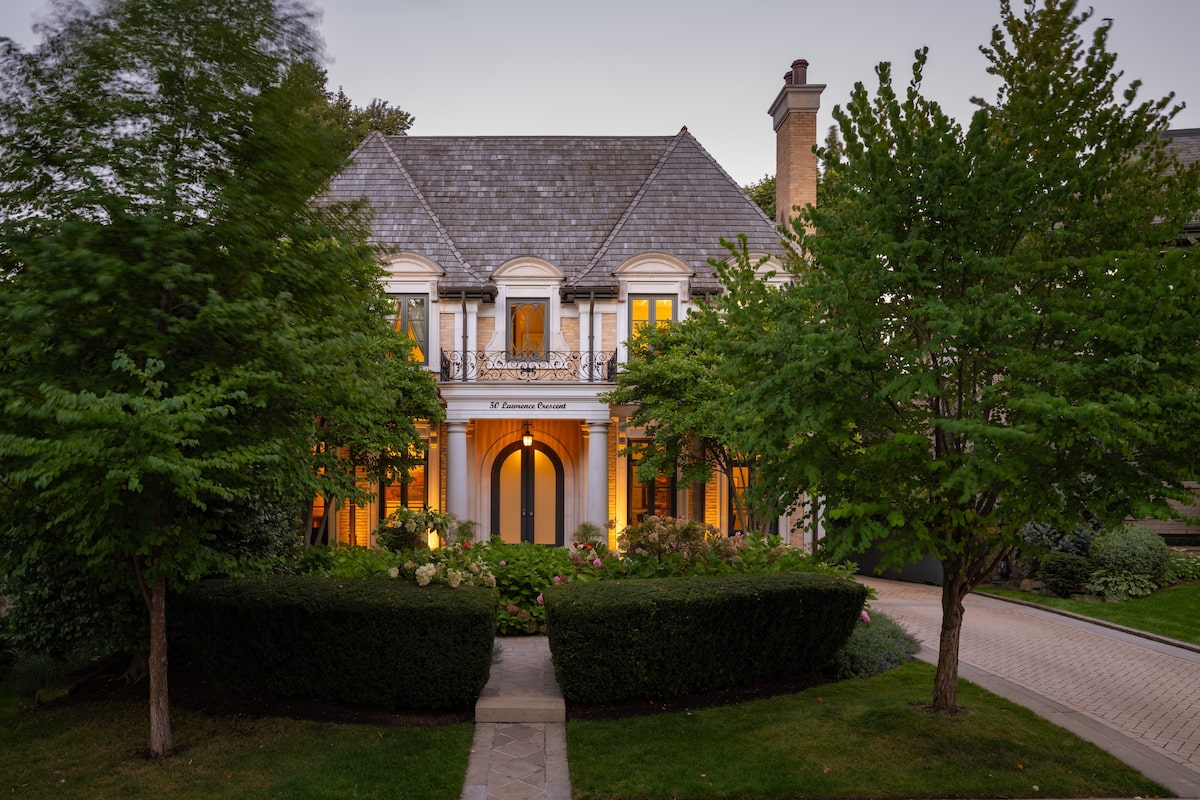
In December, the tax hike became a key consideration when the buyer and seller were hammering out a deal for a traditional five-bedroom house in the prestigious Lawrence Park area, says Mr. Kutyan.
The home with 6,100-square-feet of living space, a saltwater pool and manicured grounds, sold for $6,413,558, or approximately 3.5 per cent below the most recent asking price of $6.645-million.
“It was 100 per cent part of the negotiation,” Mr. Kutyan says of the impending tax hike.
In the end, the two sides agreed to a closing date of March 31 in order to avoid the increase.
The sellers would have preferred to hand over the keys in May or June, explains Mr. Kutyan, but closing the deal in March lops about $64,000 off the tax bill, he estimates.
Transactions were often slow to come together in 2025 as sales of detached houses in the central 416 area code declined 10.4 per cent compared with 2024 and the average price slid about five per cent.
The seller of the property at 50 Lawrence Cres., which Mr. Kutyan listed in April with an asking price of $6.895-million, accepted a conditional offer once before, but the deal fell through.
Mr. Kutyan plans to advise any homeowners planning to list in the spring to consider moving their plans forward – especially above the $5-million threshold, where the impact of the tax will be more significant.
When he represents buyers, Mr. Kutyan plans to put the onus on the seller to absorb the increase.
BMO economist says real estate has entered a ‘slow grind’ toward affordability
Mayor Olivia Chow told city residents in December her motion was aimed at “making life more affordable for families by asking luxury-home buyers to chip in more.”
In the $3-million to $4-million bracket, for example, the tax rate will increase by 0.9 per cent to 4.40 per cent from the existing rate of 3.5 per cent.
The graduated rate increases on a sliding scale so that buyers of higher-priced homes pay a larger percentage in tax.
When the revised rates kick in, buyers will pay 6.5 per cent on the portion between $5-million and $10-million, for example. The rate tops out at 8.6 per cent for the portion above $20-million.
A spurt of sales took place above the $10-million mark in the last quarter of 2023 with closings in December, Mr. Kutyan notes. That rush was followed by a few quiet months in the same price range after the luxury tax kicked in.
In Rosedale, it’s too early to tell if the tax increase will sway the decisions of buyers and sellers, say James Warren and Alexander Obradovich of Chestnut Park Real Estate.
They point to a three-bedroom semi-detached house at Cluny Drive and Roxborough Street East which sold two days after it was listefd in mid-January.
The home at 68 Cluny Dr., listed with an asking price of $3.195-million, sold for $3.11-million.
The closing date is set for mid-April, says Mr. Warren, which means the tax hike will be in effect.
The home, which had not been on the market since 2006, is well-located within walking distance of Summerhill shops and restaurants, Mr. Warren says, adding that buyers often pounce when they have been waiting for a specific type of property.
In many cases, buyers and sellers need a closing date to align with the closing for their existing or future property, he points out, and those considerations may outweigh the tax implications.
At the $3-million mark, which is an entry-level price for the historic Rosedale enclave, the change in the graduated tax will not represent a significant hike, the agents add.
Still, some sellers may set an asking price of $2.9-million to stay below that threshold.
The agents believe the more hefty tax bill may have more of an impact around the $5-million level. Also, buyers in that middle tier have a greater number of listings to choose from than those at the top end and may be more willing to compromise.
“Once you get over $5-million, I think it does start to influence people’s decisions,” says Mr. Obradovich, adding that some buyers might be willing to forgo an element – such as a garage or a swimming pool – to pay less for a property.
At the higher end, the rise will be more substantial. Well-off people tend to be judicious with their money, Mr. Warren says, but they likely will not be fazed if the home is exactly right.
“For a significant house that checks all the boxes, they’re not going to worry about the tax.”
Home of the Week: An Eden Smith house in pieces is gently stitched back together
Mr. Warren points to the example of a purchaser of an $11-million property who will pay approximately $79,000 more after the higher tax rate comes into effect on April 1.
“They may say, ‘I’ll pay another $79,000 because I’ve been waiting for that house a couple of years and it fits my needs.’”
The buyer who doesn’t see any rivals at the door may ask the seller to absorb the cost. That’s what happened in some cases in the past when new levies were introduced, he says.
But if a house draws multiple offers, the buyer will not have that leverage, he points out.
At mid-January, Mr. Warren says, there were 31 properties for sale above the $1.5-million mark in the C09 district, which includes the upscale neighbourhoods of Rosedale and Moore Park.
That’s a decrease from the peak of the fall market, when 53 properties were listed for sale in the same area and price range.
Some of the current listings are new to the market, some failed to sell in the fall and have come back at reduced prices, and some sat through Christmas, he says.
“Some of these people are somewhat ambitious in their pricing,” he says of houses at $11-million and up, which have been languishing. “If your house isn’t selling today, it’s always a price issue.”
Mr. Warren says agents need to advise well-off buyers of the amount of provincial and municipal taxes they will be on the hook for – and whether the April 1 hike will affect their purchase.
“People do not like surprises. You need to tell them that upfront.”
Mr. Warren will also be scrutinizing listings for the “brokerage remarks,” which often reveal details about the seller’s motivation. He’ll be interested to see if the text includes the phrase ‘seller will close before April 1’.
As for whether listings will be pulled forward, Mr. Warren says the all-important March break for private and public schools may have a greater influence on timing.
“Is your audience going to be here?”
Editor’s note: This article has been updated to correct the photography credits for the two exterior images.
Reading full story on Toronto Star